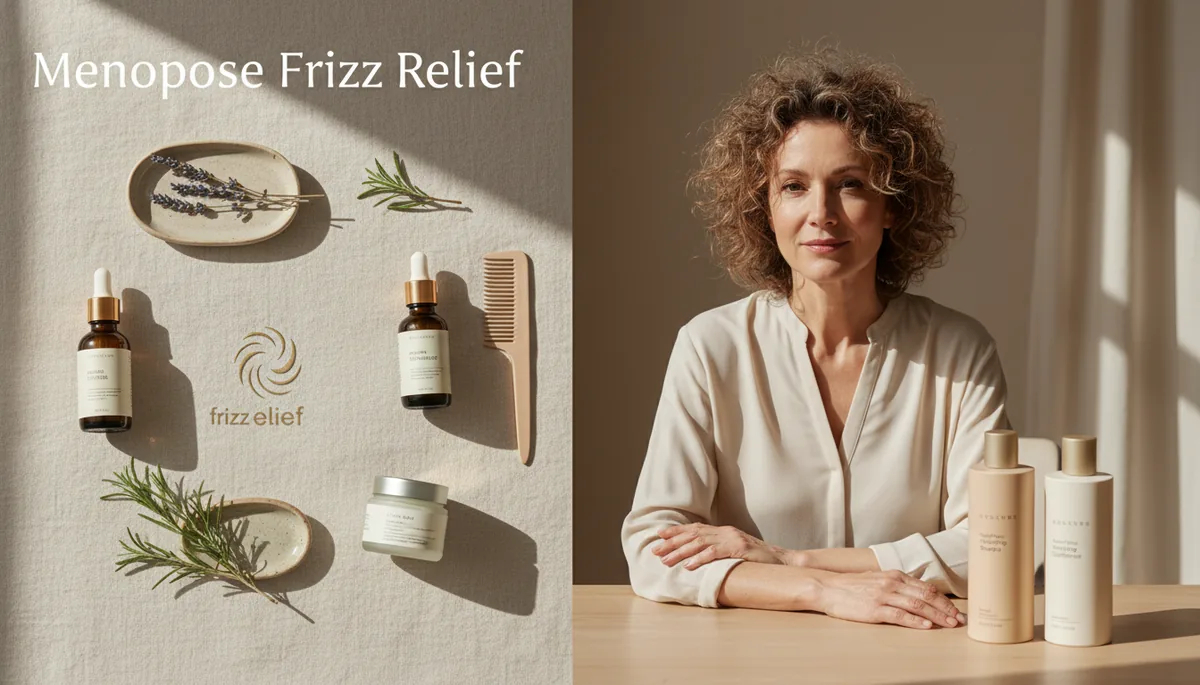
Best shampoos and conditioners for frizzy menopausal hair
Menopause changes your hair—less estrogen, lower sebum production and sometimes more porosity—so strands dry, the cuticle lifts and frizz becomes more noticeable. This practical, science-backed guide explains why that happens and gives clear criteria, ingredient tips and product picks (shampoos, conditioners and routine changes) to help calm frizz and restore softness. ⏱️ 5-min read
Understanding menopause-related frizz
During menopause, hormonal shifts—especially falling estrogen—can reduce scalp oil production and hair moisture. Lower moisture and thinner hair structure make the cuticle more likely to lift; lifted cuticles catch humidity and create the fuzzy, flyaway look we call frizz. Hair may also feel drier and more brittle, so aggressive detergents and frequent heat styling amplify the problem.
When choosing products, focus on three practical criteria:
- Hydration: formulas that attract and retain moisture without weighing hair down.
- Sulfate-free or very gentle cleansers: to avoid stripping what little oil remains on the shaft and scalp.
- Humidity resilience: ingredients or polymers that smooth and seal the cuticle for longer-lasting control.
Key ingredients for frizz-prone, menopausal hair
Know the ingredient groups that add moisture, seal the cuticle and protect against humidity:
- Humectants — glycerin, propanediol, hyaluronic acid: draw moisture into the hair shaft, helpful in low-humidity and balanced with emollients.
- Emollients and oils — argan, jojoba, squalane: soften and fill roughness along the strand surface.
- Barrier-formers and silicones — dimethicone, cyclomethicone, amodimethicone: create a smooth outer film that repels humidity and reduces friction.
- Proteins and ceramides — hydrolyzed proteins, ceramide precursors: reinforce cuticle structure and improve strand resilience, useful for higher-porosity hair.
A few practical cautions: heavy, non-water-soluble silicones can build up on very fine or thinning hair and make it look limp; use lighter silicones or water-soluble alternatives if your hair is thin. If you use richer formulas regularly, schedule a gentle clarifying wash every 2–6 weeks (depending on product buildup and how dry your hair is) to reset the hair surface without over-stripping.
Shampoos to reduce frizz in dry, menopausal hair
Look for sulfate-free, hydrating cleansers that include glycerin, hyaluronic acid or mild surfactants. These remove dirt and product without pulling out natural moisture. Avoid sulfates (SLS/SLES) if your scalp and strands already feel tight or brittle.
- Living Proof No Frizz Shampoo — sulfate-free, designed to smooth and prime the hair surface for reduced humidity-related frizz.
- Kérastase Discipline Bain Fluidealiste — a gentle, smoothing cleansing cream aimed at controlling flyaways and improving manageability.
- Pureology Hydrate Shampoo — rich, color-safe, and built for dry hair with humectants and conditioning agents to minimize frizz.
Use shampoo primarily at the scalp and let the rinse clean the lengths; for very dry hair, a co-wash or less-frequent shampooing can help retain oil and moisture.
Conditioners and masks that smooth frizz
Conditioners and masks are where you rebuild moisture and smooth the cuticle. Aim for formulas that combine emollients, light proteins or ceramides and anti-frizz polymers. Reserve richer masks for weekly or biweekly treatments if your hair is particularly dry.
- Living Proof No Frizz Conditioner — complements the No Frizz shampoo with polymers and conditioners that help seal the cuticle.
- Kérastase Discipline Fondant Fluidealiste — a smoothing conditioner that increases manageability and reduces static without heaviness.
- Moroccanoil Hydrating Conditioner — emollient-rich, good for restoring softness and improving slip for easier detangling.
Apply conditioner mid-length to ends, leave for a few minutes, then rinse with cool or lukewarm water to help the cuticle lay flatter. Use a deep conditioning mask once a week (or every two weeks) if hair is very dry or brittle.
Leave-in treatments and styling routines for menopausal frizz
A leave-in smoothing serum or cream plus a heat protectant are transformative for daily frizz control. Leave-ins add an extra layer of moisture and a film that reduces humidity penetration; heat protectants reduce damage that worsens frizz over time.
- Use a lightweight anti-frizz serum or cream after towel-drying: look for silicones or film-formers balanced with humectants and oils.
- Always apply a thermal protectant before any heat styling; choose one that also offers anti-humidity benefits.
- On humid days or between washes, refresh with a light leave-in or an anti-humidity spray rather than heavy oils that can look greasy.
Whenever possible, favor air-drying or diffuse on low heat. Minimize aggressive towel rubbing—pat or use a microfibre towel/old T-shirt to reduce cuticle lift. A wide-tooth comb or your fingers is gentler than a brush on damp hair.
Scalp health and overall hair resilience
Menopause can bring scalp dryness and sometimes thinning. Healthy hair starts at the scalp: choose gentle, non-irritating formulas and support circulation and moisture balance.
- Keep cleansers mild and avoid frequent harsh exfoliation; when you exfoliate, use a gentle physical or chemical exfoliant no more than once every 1–2 weeks to remove flakes and product buildup.
- Massage the scalp during shampooing or with oil treatments to increase blood flow and help distribute natural oils.
- Protect hair from UV and environmental stressors—use products with UV filters, wear hats, and avoid prolonged sun exposure when possible.
Avoid aggressive brushing on dry days and choose detangling strategies that minimize breakage: condition well, detangle when damp, and use protective styles if needed.
A personalized plan: testing, climate, and hair type
Every woman’s hair responds differently during menopause. A simple, low-effort tester plan helps you find what works without cluttering your routine.
- Identify your hair profile: density (thin, medium, thick), porosity (low, medium, high) and curl pattern. High-porosity hair benefits from proteins and richer emollients; low-porosity hair prefers lightweight humectants and lighter oils.
- Note your climate: in dry climates prioritize humectants plus emollients; in humid climates prioritize strong anti-humidity polymers and sealants.
- Start with a three-step routine: a gentle sulfate-free shampoo, a conditioner matched to your hydration needs, and one leave-in smoothing product. Use a deep mask weekly if needed.
- Track results for 4–6 weeks, then adjust: if hair feels weighed down, switch to lighter silicones or less leave-in; if frizz persists, try a richer mask or a protein-containing product for a treatment cycle.
Rotate products seasonally—lighter routines in humid summer months and richer hydration in dry winter—so your hair gets what it needs when it needs it.
Powered by Trafficontent
